
Emergency lighting testing: the requirements explained
5 min read
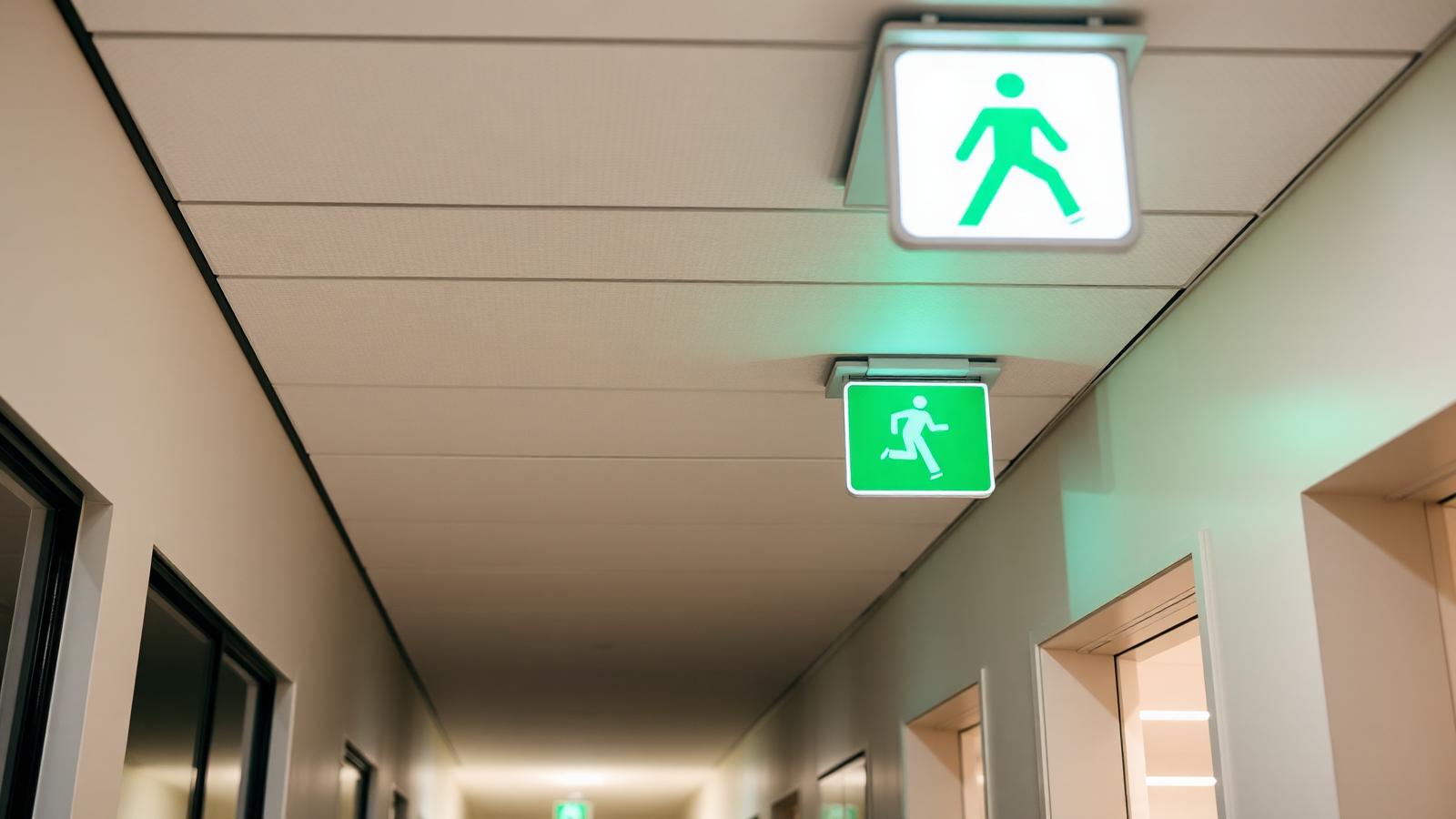
Emergency lighting exists for one situation: the moment normal supply fails and people need to leave the building. Testing is how you find out whether it will work before that moment arrives.
What the standard expects
BS 5266-1 sets out the regime for emergency lighting in UK buildings. In practice it means a short monthly function test of every luminaire and an annual full-duration test, usually three hours, proving the batteries still hold their rated output.
Monthly function tests
The supply to each luminaire is interrupted briefly and the lamp is confirmed to operate. It is a quick check, but it catches the two most common failures: a lamp that has failed and a battery that no longer charges.
The annual duration test
The full-duration test is the honest one. Batteries degrade slowly, and a luminaire that lights for ten minutes can still fail at ninety. Schedule it when the building can be left with recharged batteries afterwards, since the system is at reduced protection until charging completes.
Records matter as much as the test
A logbook, or its digital equivalent, records every test, every failure and every repair. Responsible persons under the Regulatory Reform (Fire Safety) Order are expected to produce it, and it is usually the first document requested after an incident.
Automatic testing
Self-testing and addressable systems carry out the tests and log the results without staff walking the building. On large or multi-storey sites they typically pay for themselves in labour and in the reliability of the records.